Paris, France: Rémy Cointreau
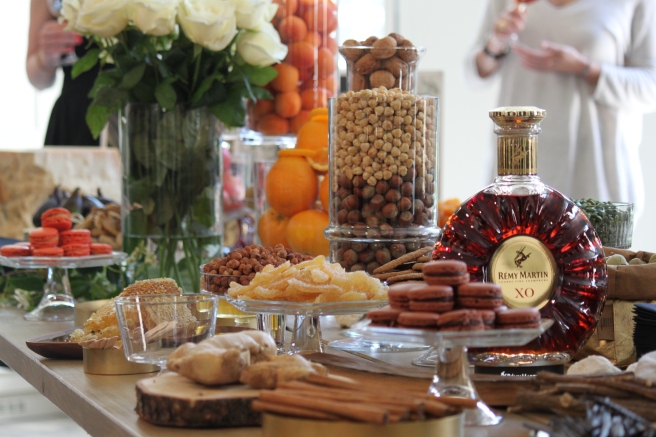
Rémy Martin XO Dégustation – Opulence Revealed
Karl Lagerfeld and the Opéra national de Paris: A multi-sensorial, artistic collaboration
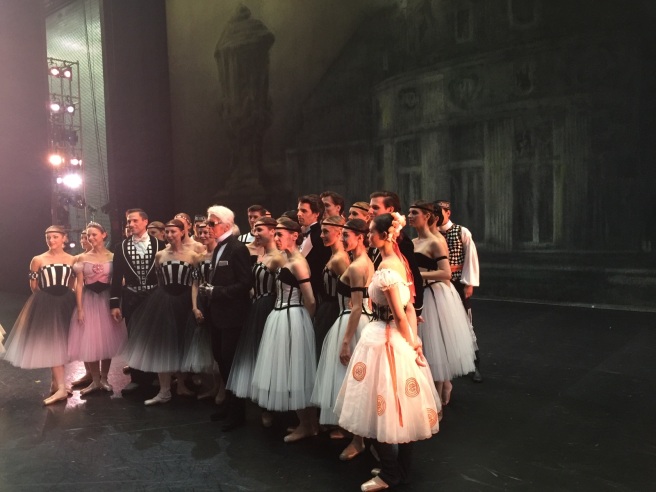
The haute couture ballet costumes and set design for George Balanchine’s Brahms-Schönberg Quartet were created by Karl Lagerfeld for the Opéra national de Paris. Renowned dancers Bart Cook and Maria Calegari served as the choreographers, and I acted as the cultural liaison and assistant to choreographers, artists, and directors. The luxurious costumes reflect an innovative, collaborative approach to fashion in the rapidly evolving globalized community. Moreover, they fully activate the five senses while providing elements of fantasy of a bygone era. For, “There will never be a world without fantasy, which expresses the unconscious unfulfilled” (S. Kaiser, 1997).
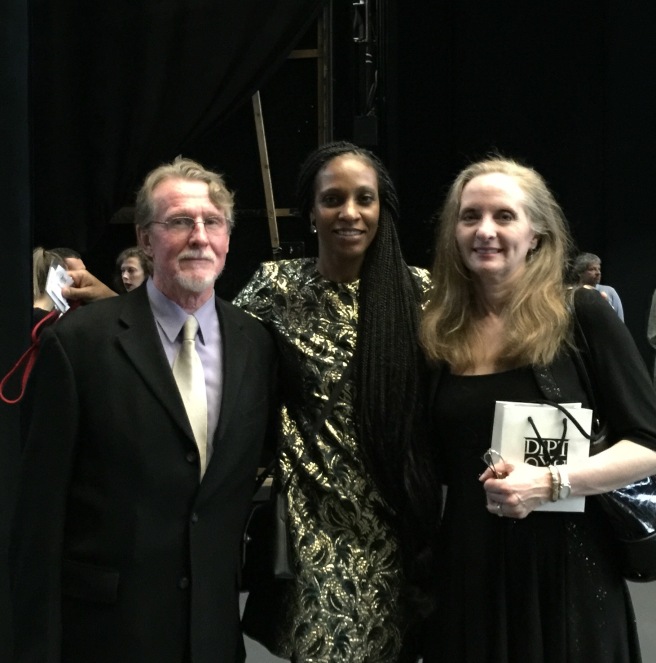
This is an essential point, since art, fashion, and culture inhabit the same multi-sensorial landscape. They represent a constantly evolving visual language which must be effectively transmitted to spectators. Inaugurated in 1875, the OnP formerly represented an elitist Parisian society. The institution was historically linked to utopian images of wealth, power, prestige, and elegance. Therefore, Lagerfeld’s costume designs for each of Balanchine’s four acts needed to the encapsulate the Zeitgeit of the OnP. That essence was effectively transmitted through a consistent visual theme involving textures, costume accessories, and classical ballet silhouettes. A muted color palette of white, pale pink, and crème-orange created a bold visual juxtaposition with the monochromatic interjection of black and white details and piping. Traditionally feminine elements and curvilinear shapes were visible with velvet headpieces and armbands, satin ribbons, tulle/chiffon tutus, and bejeweled caps. These contrasted the straight lines and geometrical shapes traditionally considered masculine.
Lagerfeld conceptualized various sketches which were inspired by the Vienna Secession, an artistic movement established in 1897. Costumes were skillfully constructed in the OnP couture atelier according to Lagerfeld’s initial artistic intentions, but still allowed for subsequent modifications and adjustments of material, fabric, and accessories. Thus, costumes were individually adapted to each ballet dancer, taking into consideration rigorous choreographic maneuvers. They also accounted for other variables including lighting, sound, and stage conditions. This resulted in the creation of regal, yet fashionable costumes which contributed to the multi-sensorial landscape while integrating an advanced degree of technological innovation and functionality.
Lagerfeld’s extensive research resulted in the creation of tailored men’s black and white suede waistcoats, as well as folklore-inspired, embroidered headdresses. The women’s costumes included black and white bodices with princess seams in satin and velvet attached to voluminous tutus constructed of pink, orange, and white tulle/chiffon. Use of luxurious fabrics and detailed embroidery created a sophisticated, glamorous environment of classic, understated elegance. It also alluded to a previous era where clothing was symbolic of an individual’s social status and morality – whether actual or contrived. Lagerfeld’s set design purposefully evoked an ancient palace adorned with heavy, gray, floor-length drapery. This contrasted the color palette and texture of the costumes. Such an atmosphere was meant to reference the waning splendor of the Austro-Hungarian Empire.
Artistic collaborations between the French heritage institution and fashion have steadily increased in the globalized economy. The OnP has hosted a variety of cultural events and fashion shows such as Stella McCartney and Dries van Noten. Moreover, the OnP has collaborated with renowned fashion designers including Christian Lacroix for George Balanchine’s Le Palais de cristal, and Yves Saint-Laurent for Roland Petit’s Notre-Dame de Paris. Recently, it has begun collaborative efforts with contemporary, avant-garde fashion designers such as Iris van Herpen for Benjamin Millepied’s Clear, Loud, Bright, Forward, Alessandro Sartori for Millepied’s La nuit s’achève, and Mary Katranzou for Justin Peck’s Entre chien et loup.
Newsletter N.1, Spring 2015

I am pleased to announce the launch of the Spring 2015 Newsletter. Future editions will seek to inform you of current activities, events, and exhibitions in the art world. Provocative discussions will be initiated in order to encourage thoughtful expression, stimulate creativity, and provide invaluable learning opportunities. Compelling blogs will also serve as an autobiographical journal exploring relevant trends. Finally, emphasizing the socio-cultural, historical, and political significance of various artistic traditions will help to promote a deeper understanding of art, photography, architecture, design, and fashion.
Newsletters will be accompanied by photographic essays, brief informational texts, and critiques. This is essential, since active participation in extensive research and art analyses are both necessary components for effective curatorial procedure. Interviews with art world professionals including museum directors, curators, gallery owners, and independent artists will be conducted, when possible. In addition, customized gifts, calendars, and other products will be available in the near future. Lastly, I am excited to announce that the 2015 publication of my PARIS photo book is now available for purchase. Find it on the following sites: Blurb hardback and e-book editions, Amazon, and in the Apple iBookstore.
Jewel Kismet Designs continues to flourish, thanks to increased visibility through various social media outlets. Please join me on Facebook and Twitter for more frequent updates. Thoroughly embracing these innovative approaches allows art to be discovered from a fresh, modern perspective. It is my hope that active engagement with an international audience not only increases visual arts access to the general public, but also enriches the lives of the globalized community.
Thank you for your support.
Sincerely,
Jewel K. Goode, Independent Curator, Photographer, and Educator
E-mail: jewelkismet@gmail.com
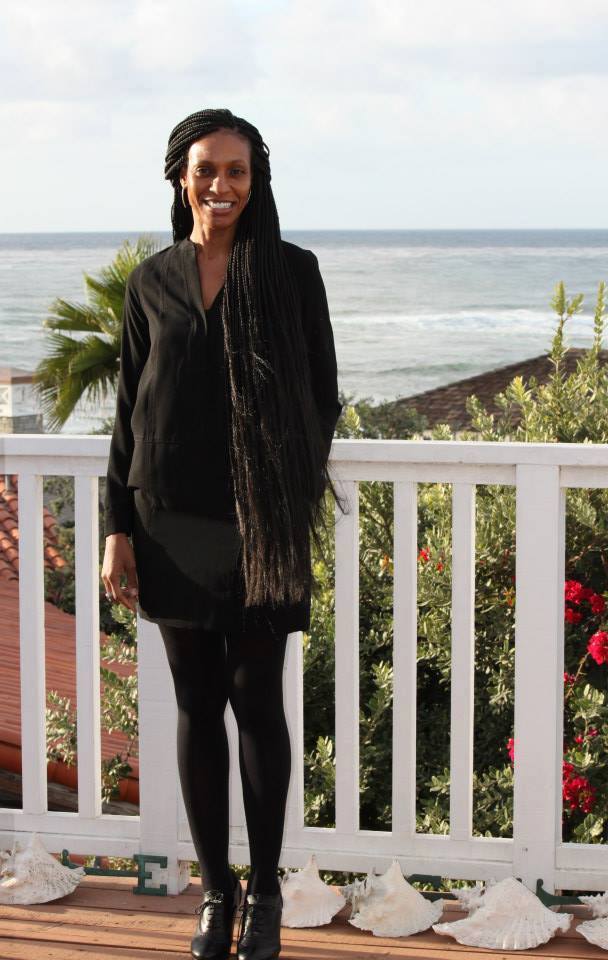
Please provide a brief autobiography.
My love affair with foreign languages, art history, photography, architecture, design, and travel began very early. I attended a Quaker boarding school before receiving a Bachelor of Arts degree in Psychology and French from a private liberal arts institution. Afterward, I spent a significant amount of time in Europe and Canada where I completed two Master of Arts degrees – one in French Civilization and Culture in Paris, and the other in Italian Studies in Florence. I have since obtained a third Master of Arts degree in Global Communications and Fashion in Paris while engaging in doctoral studies.
Experiencing life at the Sorbonne and the Università di Firenze have been significant milestones in my academic career. These unique international opportunities allowed me to sharpen linguistic skills and effectively merge them with my studies which had a strong Art History emphasis. I have always believed in the power of education, so I soon embarked on a career teaching both French and Italian at the University level. While in Rome, I also completed a T.E.F.L. certification (Teaching English as a Foreign Language). During my time abroad, I am constantly inspired – and grateful – to have lived in some of the most fascinating cities including Paris, Avignon, Florence, Siena, Berlin, Bayreuth, Toronto, and London. I have spent countless hours strolling through cobblestone streets, learning foreign languages, reveling in the artworks of museums and galleries, or simply enjoying the ambiance of cozy cafés.
How did your academic diplomas, degrees, or certificates prepare you for your current position?
Currently, I am a Global Communications Specialist, Writer, Art Curator, and Photographer, which has provided a myriad of exciting opportunities. For instance, I have most recently worked at the UNESCO HQ in Paris, serving as the Silk Roads Communications Officer, as well as the Digital Communications Officer for the #WIKI4WOMEN global initiative. In addition, I was fortunate to have worked at the prestigious Opéra national de Paris – Palais Garnier, Dance Department. It was there that I acted as a cultural liaison and assistant to choreographers, artists, directors, and Opéra Bastille. Moreover, extensive research, writing, and creativity have allowed me to fully immerse myself in various endeavors, especially when working as an Investor Relations assistant for a Paris-based, luxury spirits company where I was responsible for the financial communications.
I have also obtained a Museum Studies Certification. During this time, I learned about the theoretical and practical aspects of the art world, from installing exhibitions to essential business practices. This eventually led to work at a contemporary art museum in San Diego where I was fortunate to have worked with both the Associate Curator and Senior Marketing and Communications Manager. Experience in publishing informational texts and sourcing original images has kept me actively engaged in formal analyses necessary for effective curatorial procedure across all domains. And yes, I am thinking of publishing a book about my experiences, especially since I consider myself a writer, first and foremost.
Do you think art should be thoughtful, fun, informative, or intuitive?
I definitely think that art should be the embodiment of many things, and it is necessarily subjective. Each individual has a unique perspective about life which affects their particular viewing experience. The interrelationship between language, art, culture, and society has given me such a unique perspective of the world. Wherever I am, I am always eager to merge my interests in a cohesive way, so I continue to enroll in various art history, design, and foreign language courses. Studying Japanese, Portuguese, Arabic, German, and Spanish have become enjoyable pastimes. Thoughtful, fun, informative, and intuitive are just a few of arts implied or unintentional purposes. Therefore, the powerful emotions that art evokes are as multifaceted and as complex as the artwork itself.
How would you increase interest and educate the general public?
Educational outreach opportunities incorporating art into academic curricula is the perfect way to share knowledge and beauty with others. I also believe in implementing digital communications in order to reach and educate people in the far corners of the world. The creation of Facebook, Twitter, and Instagram accounts were my initial starting points. Not only are they fun and interactive, they also provide opportunities to share photographs, informational texts, blogs, and interviews quite frequently. When used wisely, social media can be a powerful tool. Interesting discussions regarding art historical trends, museums & gallery exhibitions, cultural events, and related activities can be a more easily initiated. I am also excited to announce that the publication of my Paris photo book is available for purchase. Find it on Amazon and in the Apple iBookstore.
Would you ever be interested in opening a Fine Art Gallery?
I have given some thought to opening an International Fine Art Gallery, and continue to weigh the positive and negative aspects carefully. Completing the Museum Studies program gave me confidence and answered many logistical questions concerning the entire process. Not only does being an art dealer/gallery owner appeal to my sublime love of art, design, and curating, but it also effectively combines my competencies and skills. At the moment I am in the very early phases of curating an online gallery and Facebook page specifically for photography and visual arts. Through continuous research, I hope to gain an even deeper understanding of such a rigorous and highly competitive field of work.
What is your favorite artistic era, and what is your favorite museum, gallery, or exhibition space?
The subject of my French Master of Arts thesis concerned 19th century European Orientalism, so I was extremely involved in that artistic era for quite some time. However, while living in Berlin, I realized that my interests were expanding. The Bauhaus, Art Nouveau, and German Expressionism really peaked my curiosity. Exploring this new world provided a certain balance and harmony to my life. I live in both La Jolla, California, and Paris, France so I travel frequently. Recently while in Paris, I visited the Musée du Quay Branly and the Musée Picasso. Afterward, I became thoroughly consumed by African, Oceanic, and Aboriginal art.
It is impossible to choose a favorite museum, gallery, or exhibition space since I tend to fall in love with unexpected quirks or grandiosity rather easily. I try to fully appreciate each experience without comparing it to another. For instance, the Louvre in Paris evokes such different emotions than the Pergamon Museum in Berlin, or the Uffizi Gallery in Florence.
Author: Jewel K. Goode. Global Communications Specialist, Writer, Art Curator, and Photographer
 Jewel K. Goode