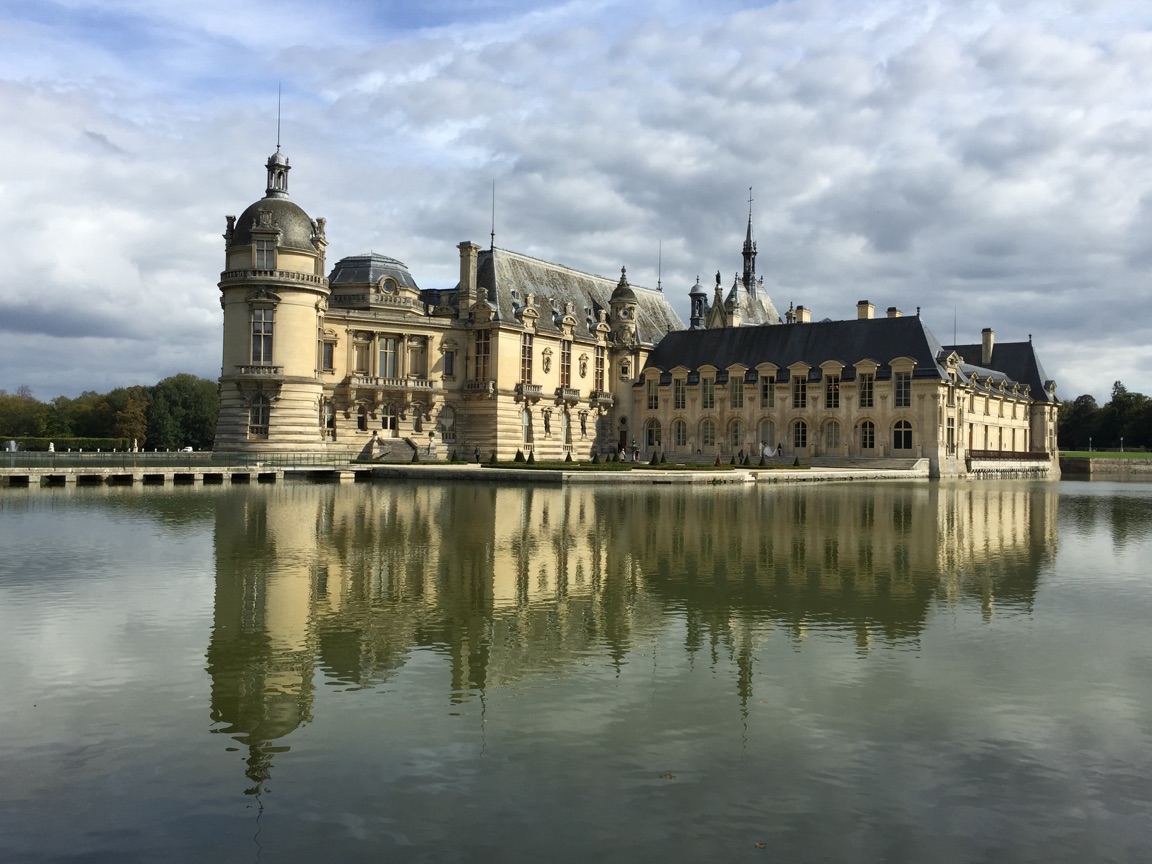
The exhibition, “Le Siècle de François 1er” (The Century of Francis I) is currently located at the Musée Condé in the Domaine de Chantilly from September 7 until December 7, 2015. It is a celebration of the 500th year anniversary of François 1er’s (1494-1547) ascension to the throne, and his victory at the Battle of Marignano in 1515. The exhibition, which is appropriately housed in the Salle du Jeu de paume of the Musée Condé, is an assemblage of 175 pieces and reflects the monarch’s profound interest in literature and the arts as seen in the multitude of paintings, architectural drawings, illuminated manuscripts, and decorative art objects. The exhibition expertly displays the interrelationship between socio-political and cultural aspects of French society with its choice of historical artifacts in an intimate environment. Courtly and family life are presented through the skillful artistic production of paintings and drawings by Jean and François Clouet, as well as an extraordinary collection of exquisitely bound books and illuminated manuscripts.
As a staunch patron of the arts, François 1er surrounded himself with scholars, humanists, scientists, scribes, and artists. Inspired by the innovation and intellectualism of the Italian Renaissance, the monarch often invited artists such as Francesco Primaticcio, Benvento Cellini, and Rosso Fiorentino, among others, to his court. The Domaine de Chantilly was inherited by Henri d’Orléans, Duke of Aumale, son of the last King of France, Louis-Philippe. It was bestowed upon him in 1830 by his godfather Louis-Henri-Joseph de Bourbon, the last Prince of Condé, and later bequeathed to the Institut de France in 1886. It is a vast estate and includes a Château with three expansive gardens spread over 115 hectares. The Château houses the second largest collection of antique paintings after the Louvre, and is the second largest library in France for illuminated manuscripts.
The neo-Renaissance style Château is comprised of the Petit Château, constructed in 1560, and the Grand Château. The latter had been destroyed during the French Revolution and subsequently reconstructed by architect Honoré Daumet between the years 1876 – 1885. An equestrian statue of the Constable Anne de Montmorency was erected in 1886 and is located on the terrace, facing the entrance. The entirety includes a chapel and urn containing the hearts of the Princes of Condé (17th century), an apartment complex for the Comte de Paris, designated museum rooms, and reception areas. The Domaine de Chantilly is also home to the elegant 18th century Grandes Écuries (Great Stables), designed by architect Jean Aubert. Its Musée du cheval (Museum of the Horse) boasts 200 works of art and decorative arts pieces, as well as equestrian events which are devoted to the art of haute-école horse training.
Palais-Royal: 8, rue Montpensier, 75001. Designed by architect Jacques Lemercier (1585-1684) in 1639
Originally known as Le Palais-Cardinal, Le Palais-Royal (or royal residence), acquired its name after the death of Cardinal Richelieu (1585-1642). Its stately façade is visible along rue Saint-Honoré, but claims an official address of 8, rue de Montpensier. Presently, it houses La Ministère de la Culture et de la Communication, Le Conseil d’état, and Le Conseil Constitutionnel. Designed by architect Jacques Lemercier (1585-1684) in 1639, the entire complex is reminiscent of neoclassical glory. Structural harmony and formal grandeur are produced with an emphasis on geometrical precision, symmetry, and monochromatic use of materials. The effect is reinforced with the repetition of solid columns, rounded arches, and refined pilasters topped with Corinthian entablatures. Structural levels and registers are vertically-horizontally delineated with the addition of delicate balustrades. Every element complements the other, thus creating visual balance.
Remnants of the La Galerie d’Orléans columns still exist, located between La Cour d’Honneur and Le Jardin du Palais-Royal. Fountains by Belgian sculpture Pol Bury (1922 – 2005) affectionately known as Sphérades due to their large, metallic spheres, and other temporary sculpture installations can also be found in the royal gardens. La Cour d’Honneur is an open, communal zone. It is home to the site-specific artwork by Daniel Buren, Les Deux Plateaux (1986) (or Les Colonnes de Buren) – striped black and white posts of varying dimensions. The interconnection between neoclassical and modern is prevalent here. There is a constant re-contextualization and reconfiguration of public space for contemporary society. Although Le Palais-Royal is historically steeped in exclusivity and elitism, all visitors are afforded the option of strolling through the tree-lined gardens, as well as the colonnaded arcades filled with electric lamps, contemporary galleries, fashion boutiques, and an assortment of restaurants including Le Grand Véfour. First opened in 1784 by Antoine Aubertot, it was later purchased by Jean Véfour in 1820.
Comédie-Française: 2, rue de Richelieu, Place André-Malraux, 75001. Salle Richelieu, designed by architect Victor Louis (1731-1800) in 1790.
La Comédie-Française is an elegant, three-century old institution located on 2, rue de Richelieu. Located adjacent to Le Palais-Royal, it exudes a formidable aura. Salle Richelieu, site of the present La Comédie-Française, was designed by architect Victor Louis (1731-1800) in 1790. Stately columns, delicate balustrades, elegant arches, and refined pilasters with ornate entablatures add to the structure’s formal composition. Its façade complements that of Le Palais-Royal with its visual symmetry and concise delineation of space, clearly visible with its vertical and horizontal registers. Founded by Louis XIV in 1680, La Comédie-Française was the result of the merging of two theatrical groups of the seventeenth century: Théâtre Guénégaud and Hôtel de Bourgogne. A total of twenty-seven were actors were chosen specifically by Le Roi-Soleil.
The establishment, part of Le Palais-Royal complex, is formerly known as Le Théâtre-Français and La Maison de Molière, after renowned playwright Molière (1622-1673), né Jean-Baptiste Poquelin. The company, which had a repertory of writers including Molière, Corneille, and Racine, held a monopoly over performances in Paris until 1790. The original association of actors included, among others: Jeanne Beauval, Hubert de Croisy, and Armande Béjart. The establishment has been located at its present site, Salle Richelieu, since 1799, and has undergone several enlargements and modifications over the years.
Pyramide du Louvre: Palais du Louvre, Cour Napoléon, 75001. Designed by architect I. M. Pei (1917 – ) in 1989.
Finally, the controversial La Pyramide du Louvre was designed by Chinese architect I. M. Pei (1917 – ) and is centrally located in La Cour Napoléon of the Le Palais du Louvre. Commissioned by French President François Mittérand in 1984, it was completed in 1989. The imposing metal and glass structure has a base of 35 meters and stands nearly 22 meters tall. It serves as a main entrance to Le Musée du Louvre, and is surrounded by a water feature in addition to three smaller pyramids. An inverted pyramid accompanies the entirety of the complex, and serves as a skylight for the Carrousel du Louvre shopping district located directly below.
Critics of the structure have argued that its hyper-modernity in use of materials exists in direct contrast to the classical, symmetrical, and visually-balanced Palais du Louvre. Harsh, severe angles created by the glass structure create a prominent juxtaposition against Le Palais du Louvre. However, opponents note that the complexity of architectural components reflect France’s dynamic, historical trajectory which encourages provocative discussion, inspires innovative techniques, and stimulates creativity among its population. The juxtaposition of neoclassical elements with modern elements creates a modern, fresh association that is constantly evolving. This is executed by promoting thoughtful expression, respect, and appreciation cross-culturally in an ever-expanding expanding globalized community. In the twenty-first century, most would agree that La Pyramide du Louvre is the embodiment of a transformative French nation par excellence; one that cherishes past endeavors, but fully embraces future possibilities.
My love affair with foreign languages, art history, photography, architecture, design, and travel began very early. I attended a Quaker boarding school before receiving a Bachelor of Arts degree in Psychology and French from a private liberal arts institution. Afterward, I spent a significant amount of time in Europe and Canada where I completed two Master of Arts degrees – one in French Civilization and Culture in Paris, and the other in Italian Studies in Florence. I have since obtained a third Master of Arts degree in Global Communications and Fashion in Paris while engaging in doctoral studies.
Experiencing life at the Sorbonne and the Università di Firenze have been significant milestones in my academic career. These unique international opportunities allowed me to sharpen linguistic skills and effectively merge them with my studies which had a strong Art History emphasis. I have always believed in the power of education, so I soon embarked on a career teaching both French and Italian at the University level. While in Rome, I also completed a T.E.F.L. certification (Teaching English as a Foreign Language). During my time abroad, I am constantly inspired – and grateful – to have lived in some of the most fascinating cities including Paris, Avignon, Florence, Siena, Berlin, Bayreuth, Toronto, and London. I have spent countless hours strolling through cobblestone streets, learning foreign languages, reveling in the artworks of museums and galleries, or simply enjoying the ambiance of cozy cafés.
Currently, I am a Global Communications Specialist, Writer, Art Curator, and Photographer, which has provided a myriad of exciting opportunities. For instance, I have most recently worked at the UNESCO HQ in Paris, serving as the Silk Roads Communications Officer, as well as the Digital Communications Officer for the #WIKI4WOMEN global initiative. In addition, I was fortunate to have worked at the prestigious Opéra national de Paris – Palais Garnier, Dance Department. It was there that I acted as a cultural liaison and assistant to choreographers, artists, directors, and Opéra Bastille. Moreover, extensive research, writing, and creativity have allowed me to fully immerse myself in various endeavors, especially when working as an Investor Relations assistant for a Paris-based, luxury spirits company where I was responsible for the financial communications.
I have also obtained a Museum Studies Certification. During this time, I learned about the theoretical and practical aspects of the art world, from installing exhibitions to essential business practices. This eventually led to work at a contemporary art museum in San Diego where I was fortunate to have worked with both the Associate Curator and Senior Marketing and Communications Manager. Experience in publishing informational texts and sourcing original images has kept me actively engaged in formal analyses necessary for effective curatorial procedure across all domains. And yes, I am thinking of publishing a book about my experiences, especially since I consider myself a writer, first and foremost.
I definitely think that art should be the embodiment of many things, and it is necessarily subjective. Each individual has a unique perspective about life which affects their particular viewing experience. The interrelationship between language, art, culture, and society has given me such a unique perspective of the world. Wherever I am, I am always eager to merge my interests in a cohesive way, so I continue to enroll in various art history, design, and foreign language courses. Studying Japanese, Portuguese, Arabic, German, and Spanish have become enjoyable pastimes. Thoughtful, fun, informative, and intuitive are just a few of arts implied or unintentional purposes. Therefore, the powerful emotions that art evokes are as multifaceted and as complex as the artwork itself.
Educational outreach opportunities incorporating art into academic curricula is the perfect way to share knowledge and beauty with others. I also believe in implementing digital communications in order to reach and educate people in the far corners of the world. The creation of Facebook, Twitter, and Instagram accounts were my initial starting points. Not only are they fun and interactive, they also provide opportunities to share photographs, informational texts, blogs, and interviews quite frequently. When used wisely, social media can be a powerful tool. Interesting discussions regarding art historical trends, museums & gallery exhibitions, cultural events, and related activities can be a more easily initiated. I am also excited to announce that the publication of my Paris photo book is available for purchase. Find it on Amazon and in the Apple iBookstore.
I have given some thought to opening an International Fine Art Gallery, and continue to weigh the positive and negative aspects carefully. Completing the Museum Studies program gave me confidence and answered many logistical questions concerning the entire process. Not only does being an art dealer/gallery owner appeal to my sublime love of art, design, and curating, but it also effectively combines my competencies and skills. At the moment I am in the very early phases of curating an online gallery and Facebook page specifically for photography and visual arts. Through continuous research, I hope to gain an even deeper understanding of such a rigorous and highly competitive field of work.
The subject of my French Master of Arts thesis concerned 19th century European Orientalism, so I was extremely involved in that artistic era for quite some time. However, while living in Berlin, I realized that my interests were expanding. The Bauhaus, Art Nouveau, and German Expressionism really peaked my curiosity. Exploring this new world provided a certain balance and harmony to my life. I live in both La Jolla, California, and Paris, France so I travel frequently. Recently while in Paris, I visited the Musée du Quay Branly and the Musée Picasso. Afterward, I became thoroughly consumed by African, Oceanic, and Aboriginal art.
It is impossible to choose a favorite museum, gallery, or exhibition space since I tend to fall in love with unexpected quirks or grandiosity rather easily. I try to fully appreciate each experience without comparing it to another. For instance, the Louvre in Paris evokes such different emotions than the Pergamon Museum in Berlin, or the Uffizi Gallery in Florence.



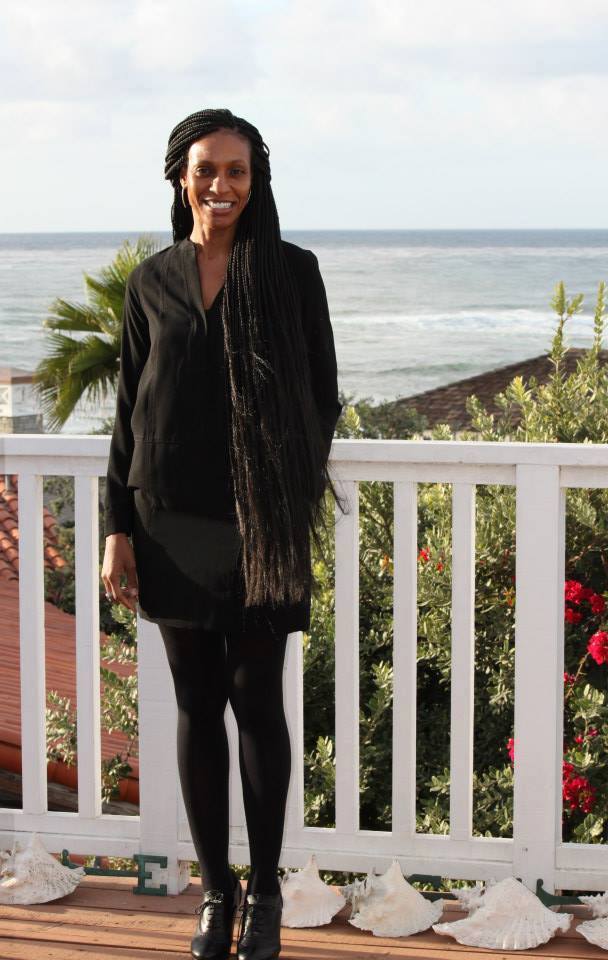
 Jewel K. Goode